Small-Space Living in Asia: AI Interior Design Trends & Data for 2026
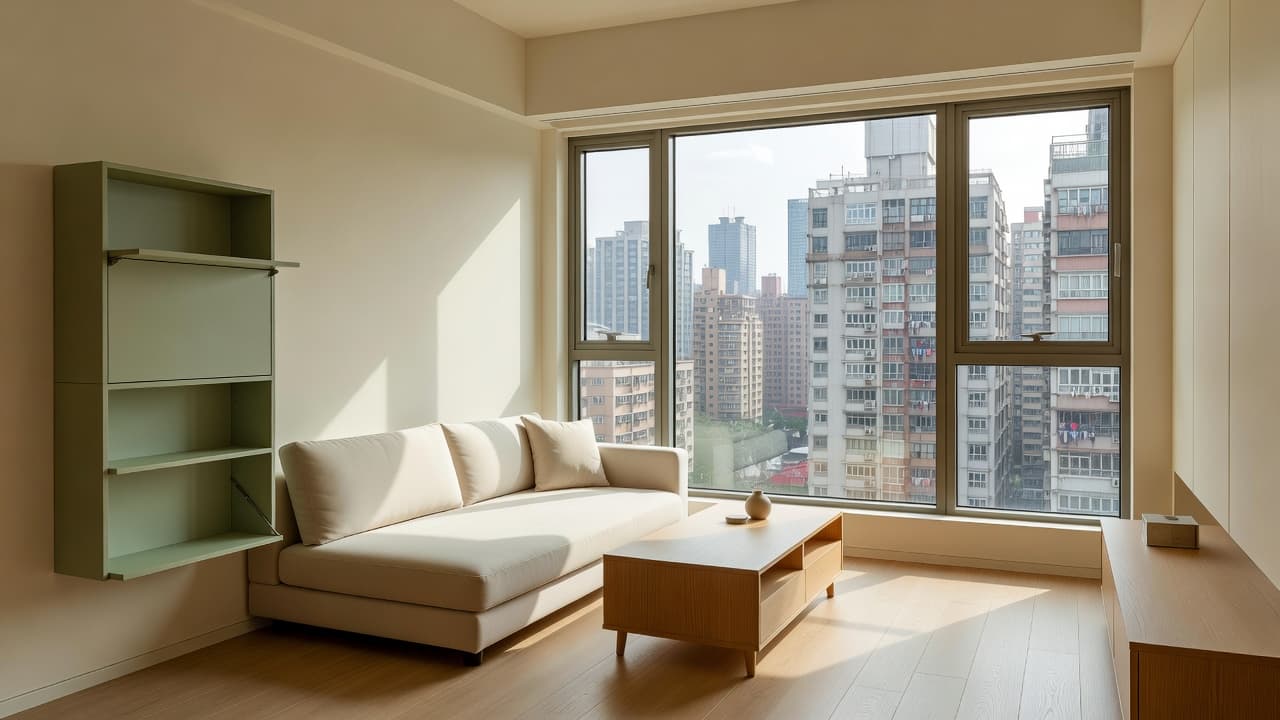
Asia is home to some of the most space-constrained cities on the planet, and that reality is quietly reshaping how people approach interior design. Below is a look at the numbers behind small-space living across the region, and what they tell us about why AI interior design has moved from novelty to genuinely useful tool for millions of renters and apartment owners. We have pulled together commonly cited housing data alongside usage patterns we track inside the DecorAI app itself, to build a fuller picture of why compact-home design has become such a distinct category rather than a scaled-down version of Western interior design.
This is not a downside to design around — it is simply the reality of how most people across Asia’s biggest cities actually live, and it deserves design tools built specifically for it rather than borrowed from markets with very different housing stock.
Average Apartment Sizes Across Major Asian Cities
Home sizes vary enormously across the region, but the pattern is consistent: Asia’s major urban centres are, on average, far more compact than suburban housing markets elsewhere in the world. The commonly cited figures below give a sense of scale.
| City | Typical Home Size | Note |
|---|---|---|
| Hong Kong | ~45 m² (≈484 sq ft) | Among the smallest average home sizes of any major city in the world. |
| Tokyo | ~65 m² (≈700 sq ft) | Compact by design, with many studio and 1K units well under 30 m². |
| Seoul | ~68 m² (≈730 sq ft) | One-room and officetel units are frequently under 20 m². |
| Singapore | ~90 m² (≈970 sq ft) | Larger on average, though city-centre condos skew much smaller. |
| Taipei | ~65 m² (≈700 sq ft) | Older apartment stock often means narrow, irregular layouts. |
| Mumbai | ~60 m² (≈645 sq ft) | High density drives strong demand for space-saving design. |
Figures are commonly cited market averages rounded for readability and will vary by district, building age and property type.
Quick answer: apartments in Asia’s major cities average roughly 45–90 m², far smaller than typical Western suburban homes. That gap is driving demand for AI interior design tools built specifically for compact layouts — multifunctional furniture, light palettes and smart storage — rather than templates designed around much larger rooms.
Why Small-Space Living Is Reshaping Interior Design
According to UN-Habitat, Asia is the world’s most rapidly urbanising region, and that continued migration toward dense city centres is a major driver of smaller average home sizes. As more urbanisation pushes populations into compact housing stock, design approaches built for spacious suburban homes become far less useful. Multifunctional furniture, lighter colour palettes and smart storage are no longer aesthetic preferences — they are practical necessities.
How Asia Compares to the Rest of the World
For context, average home sizes in suburban markets across North America and Australia are frequently two to three times larger than the figures above. That gap is not a design preference — it is a direct result of population density, land cost and the sheer scale of vertical living across Asia’s largest cities. It also explains why so many interior design tools, tutorials and mood boards built for Western audiences simply do not translate well: a layout that works beautifully in a 140 m² house rarely survives the jump to a 40 m² apartment.
What We’re Seeing in AI Interior Design Usage
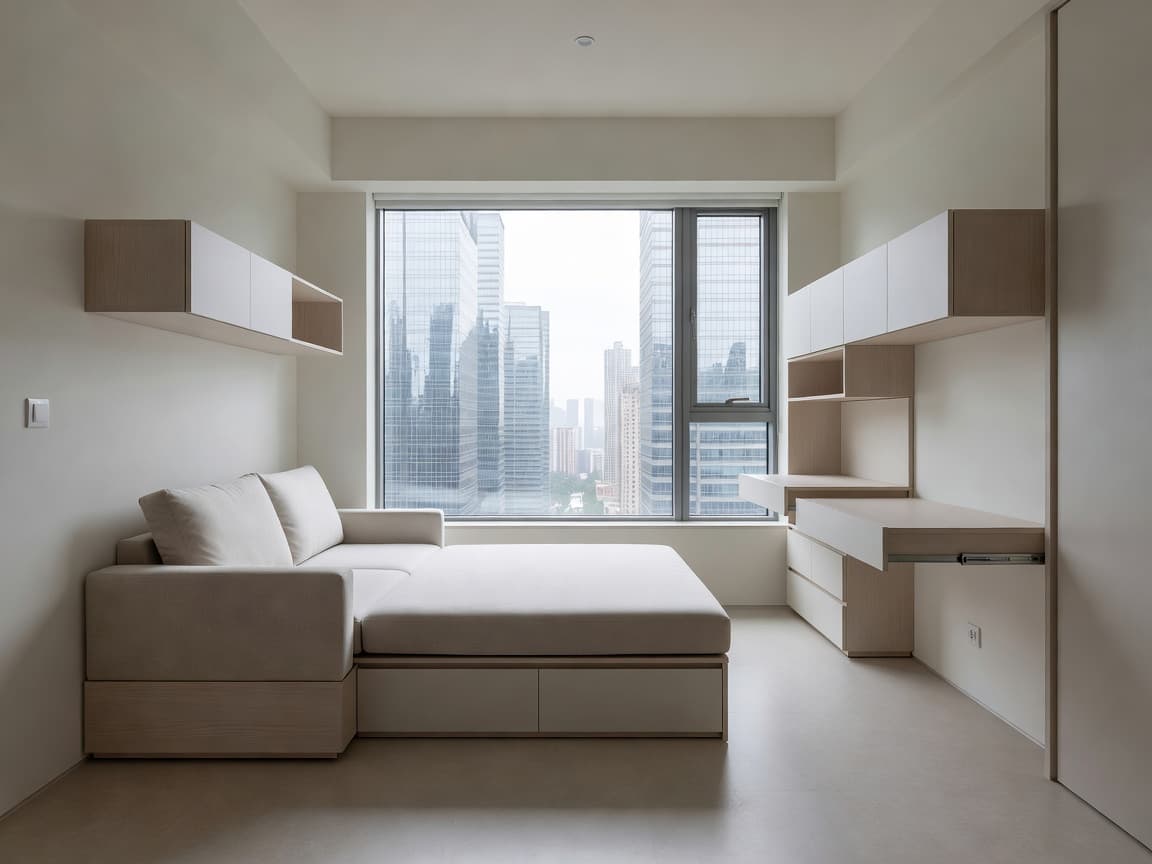
Since launching DecorAI across Asia, a few clear patterns have emerged in how people actually use an AI room planner in space-constrained homes:
- Small-space and studio users generate the most redesigns per session — often comparing three or more styles on the same photo before settling on a direction, reflecting how much value compact-home users place on getting a layout right the first time.
- Warm minimalist and Japandi are the two most requested styles in dense city-centre markets, likely because both rely on light palettes and low-profile furniture that visually expand a small room.
- Renters engage with before-and-after comparisons more than any other feature, which tracks with the reality that most renters cannot make permanent structural changes and need to plan around furniture and decor alone.
- Bedrooms and living rooms are redesigned far more often than kitchens or bathrooms in small apartments — the rooms where multifunctional layouts matter most.
None of this is surprising once you consider the average home sizes above — but it does explain why a design tool built specifically around compact Asian apartments performs so differently from one designed with larger Western homes in mind.
See how your own space compares — upload a photo of your apartment and generate a space-smart AI interior design concept in seconds.


A Closer Look at Three Compact Markets
Hong Kong: The World’s Most Compact Big City
With average home sizes around 45 m², Hong Kong is frequently cited as having some of the smallest typical living spaces of any major global city. Micro-flats well under 20 m² are not unusual in dense districts, which has pushed multifunctional furniture and slim-profile design from a nice-to-have into a genuine necessity for most residents.
Tokyo: Compact by Design, Not by Accident
Tokyo’s housing stock includes a huge share of studio and 1K apartments, often intentionally compact even where larger units are available, reflecting a long cultural tradition of minimalist, natural-material design that pairs naturally with small-footprint living.
Seoul: The Rise of the One-Room
Studio and “one-room” apartments are extremely common among renters in Seoul, particularly younger residents and students, driving strong demand for cozy, photogenic interiors that make the most of a single multi-purpose room — exactly the brief behind the Korean minimalist style direction inside DecorAI’s style library.
The Design Styles Winning in Small Asian Apartments
Japandi and Warm Minimalist
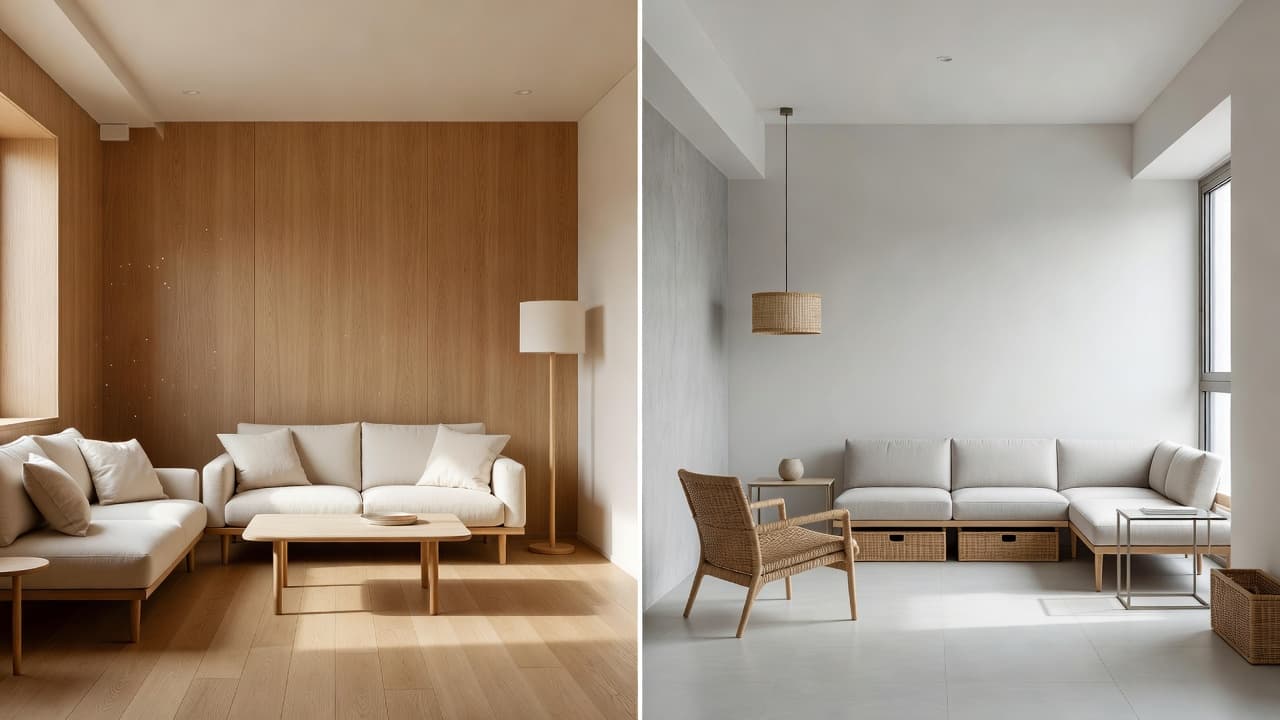
Both styles lean on neutral, light-reflecting palettes, natural materials and low furniture silhouettes — all of which make a small room feel larger without any structural change. It is one reason Japandi has become one of the most requested interior styles inside the DecorAI style library.
Modern Condo and Tropical Modern
Popular in Singapore, Bangkok and Kuala Lumpur, these directions balance a clean, contemporary base with warmer natural textures — rattan, teak, linen — suited to high-rise condo living and tropical light.
Dedicated Small-Space Design
Rather than shrinking a large-room concept, small-space design starts from multifunctional furniture and slim profiles as the brief itself — the approach that resonates most strongly with users in Hong Kong, Tokyo and Seoul.
What This Means for Furniture Shopping and Renovation Planning
The shift toward smaller average homes has a direct, practical consequence: buying furniture sized for a much larger room is one of the most common and expensive mistakes people make when decorating a compact apartment. A sectional sofa designed for a 35 m² living room can dominate a 15 m² space entirely, blocking walkways and making the room feel smaller rather than larger.
This is exactly where visualising a purchase before committing to it earns its value. Testing a piece of furniture’s scale and style against your actual room — rather than guessing from a showroom floor or a product photo shot in a spacious studio — helps avoid costly returns and awkward fits. It is one of the most practical, unglamorous reasons renters and apartment owners reach for an AI interior design app before a big purchase.
Early-Stage Renovation Planning
The same logic applies before a renovation. Comparing two or three AI-generated directions on your existing room gives you a clearer, more specific brief to bring to a contractor or designer than a vague verbal description or a handful of unrelated inspiration photos — though for the structural, electrical or plumbing work itself, a licensed professional is still essential.
How to Apply These Trends to Your Own Home
Data is only useful if it changes what you actually do. Based on the patterns above, three practical takeaways stand out for anyone living in a compact Asian apartment:
- Prioritise multifunctional furniture first — a sofa bed, extendable table or storage ottoman does more for a 20 m² room than any single decor choice.
- Lean toward lighter palettes — the data-backed popularity of Japandi and warm minimalist styles in dense cities is not a coincidence; light, neutral tones genuinely make small rooms feel larger.
- Compare before you commit — since renters and small-space users get the most value from before-and-after comparisons, generate two or three AI directions on your own room before buying anything.
Frequently Asked Questions
Why are apartments in Asian cities so much smaller on average?
High population density, limited land availability and rapid urbanisation all push average home sizes down in major Asian cities, particularly Hong Kong, Tokyo and Seoul. See UN-Habitat for broader context on urbanisation trends across the region.
What is the best interior design style for a small apartment?
Based on usage patterns, Japandi and warm minimalist styles tend to perform best in compact rooms because they rely on light palettes, low furniture profiles and natural materials that visually expand a space rather than filling it.
Can AI interior design actually help with a very small room?
Yes, provided the tool is built with compact spaces in mind. DecorAI includes a dedicated small-space design direction alongside Japandi, Korean minimalist and modern condo styles, specifically because generic large-room templates rarely translate to Asia’s smaller average apartment sizes.
Where does this data come from?
The apartment size figures above reflect commonly cited market averages for each city, rounded for readability. The usage patterns are drawn from how people actually interact with the DecorAI app across our Asia markets — which styles get chosen most often, which rooms get redesigned first, and how many directions people compare before saving a favourite.
Where Small-Space Design Is Heading in 2026
As average home sizes across Asia’s largest cities continue to hold steady or shrink further, expect AI interior design tools to keep leaning into photo-based personalisation rather than generic templates. The value of an AI home design app in a market like Hong Kong or Seoul is not aesthetic novelty — it is the ability to plan a genuinely workable layout for a room that may be a third the size of the “after” photos found on generic inspiration sites.
Three shifts stand out as small-space design continues to mature across the region in 2026:
- Mobile-first stays dominant. Given how often small-space decisions happen in the moment — in a furniture store, mid-move, standing in an empty rental — phone-based tools will keep outpacing desktop-only design software for everyday use.
- Style libraries keep specialising. Rather than one generic “minimalist” category, expect more granular directions — Korean minimalist, Japandi, tropical modern, dedicated small-space design — as apps compete on relevance to specific apartment types rather than breadth alone.
- Before-and-after becomes the default expectation. As more renters and apartment owners get used to comparing real before-and-after redesigns, static mood boards without that comparison will increasingly feel like an outdated way to plan a room.
If you want to see how these trends apply to your own home, try uploading a photo of your apartment to DecorAI and compare a few space-smart style directions for yourself — it is free on both the App Store and Google Play.
For a step-by-step walkthrough of the process, see our guide on how to redesign your apartment with AI.